Showing posts with label Food. Show all posts

Sunday, December 9, 2007

Growing Sprouts In 6 Easy Steps

A high source of protein and energy, beans are an important part of a healthy diet, especially if you're trying to loose weight. I like to grow sprouts from my beans, they are easy to grow, and make a healthy addition to any salad.

You can sprout many beans including; alfalfa, barley, broccoli, buckwheat, cabbage, fenugreek, garbanzo, green peas, lentils, mung beans, radishes, red clover, wheat, soy beans, sunflowers and more. Make sure that you always purchase beans, which have been packaged for sprouting, no other type will do.

Growing sprouts in a jar
The easiest method is to grow sprouts in a glass jar, any size will do. To provide plenty of fresh air, cover the top of the jar with muslin, cheese cloth or nylon mesh screen and secure with a rubber band. You can also buy specially sprouting lids designed for this purpose.

Step One: Soaking
In a litre jar, put 1 ½ to 2 tablespoons of small seeds, and up to 1 cup of larger seeds, like green peas or garbanzor. Cover top of jar with cloth or sprouting lid and rinse the seeds in warm (not hot) water. Drain and refill so that water is about an inch above the seeds. Let the seeds soak 8-12 hours (overnight). Protect from light by covering with a dish towel or placing in a cupboard.

Step Two: Rinsing
Rinse 2 to 3 times per day for 3 to 4 days (depending on the temperature). After thoroughly draining the rinse water, lay the jar on its side to spread out the seeds. Do not expose to light. After 3 to 4 days the sprouts should be filling up the jar. Sometimes I keep doing this for 5 days, it depends on how you like your sprouts, experiment and see what you like.

Step Three: Removing Hulls
After 3 to 4 days the sprouts will have thrown off their hulls. To remove the hulls, place the sprouts in a bowl and run cool water over them. Most of the hulls will either float to the top or sink to the bottom making them easy to remove. (Note: not all seeds have hulls.)

Step Four: Harvesting
Rinse sprouts in cool water and remove any remaining hulls. Drain in a colander, but do not allow the sprouts to dry out. Place in an air-tight bag leaving room for air circulation.

If your sprouts need to develop chlorophyll or carotene there is one final step. (The seed package directions should tell you whether greening is necessary.)

Step Five: Greening
Once the hulls are removed, place the sprouts back into the sprouting jar or into a clear plastic airtight bag. Put the sprouts in indirect sunlight. It takes about a day for the chlorophyll and carotenes to develop. Once the sprouts are ready rinse, drain, and eat, or refrigerate.

Storing:
Sprouts will keep for about a week in the refrigerator if you rinse them once every day or two. Be sure to keep the sprouts from freezing as they are frost sensitive.

6 Sprouting Tips:
If you stick to these tips you'll never go wrong:

  • Rinse often (2-3 times/day).
  • Keep them moist, not wet.
  • Keep them at room temperature.
  • Give them air to breathe.
  • Don’t grow too many in one container.
  • Keep them in a dark place.
Happy Sprouting :-)

Friday, November 16, 2007

9 Nuts For Your Health

While in the vegetable shop this morning, I brought some roasted nuts. All the way home, I wondered if there were any health benefits to all the nuts and seeds we eat. So I've done a little bit of research and I thought I would share my results with you.

Firstly a nut is a dried fruit with one (sometimes two) seeds, and there are many different types. Nuts can be high in calories and fat, yet they have many health benefits. Eating nuts is believed to reduce your risk of heart disease, lower serum LDL cholesterol concentrations, plus nuts generally have a very low glycemic index (GI), therefore are helpful for patients with insulin resistance problems such as diabetes mellitus type 2.

I wanted to look at the Health benefits of 9 most common Nuts/Seeds, we have here at home:

1. Almonds:

  • Are believed to induce high intellectual level and longevity.
  • Are high in omega-9 monounsaturated fatty acids.
  • Are believed to have anti-inflammatory, immunity boosting, and anti-hepatotoxicity effects.
  • Contain the amino acid arginine, which inhibits tumour growth and boosts immunity.
  • Elevate the blood levels of high density lipoproteins and of lowering the levels of low density lipoproteins.
  • Lower your risk of heart attack and improve your bone strength.
  • Per ounce (28.41g) provides: 7.5 milligrams (mg) vitamin E, 75 mg calcium, 81 mg magnesium, 211 mg potassium.
2. Peanuts:
  • Are also one of the few foods naturally containing Coenzyme Q10, which is present in all human cells and responsible for the production of the body’s own energy.
  • Are also one of the highest sources of vitamin B3, also called niacin and thus contributes to brain health, brain circulation and blood flow.
  • Are a rich source of protein: roughly 30 grams per cup after roasting.
  • Are a significant source of resveratrol, a chemical studied for potential anti-aging effects and also associated with reduced cardiovascular disease and reduced cancer risk.
  • Are high in antioxidants.
  • Are high in omega-9 monounsaturated fatty acids.
3. Pecans:
  • Are a good low fat source of vitamin E and also have anti-cancer effects.
  • Are a good source of protein and unsaturated fats.
  • Are high in omega-9 monounsaturated fatty acids.
  • Can lower the risk of gallstones in women.
  • Contain plant sterols, which are known for their cholesterol-lowering ability.
4. Pine Nuts:
  • Are a good source of dietary fibre.
  • Contain (depending on species) between 10–34% of protein, with Stone Pine having the highest content.
  • Pine nuts can be pressed to extract pine nut oil
    Pine Nut Oil:
  • Boosts appetite suppressors up to 60% for four hours, as well as acting as an appetite suppressant itself.
  • Can reduce LDLs, yielding further health benefits.
  • Contains a high concentration of free radical scavengers, which help reduce oxidative damage that can lead to peptic ulcers or gastritis.
5. Walnuts:
  • Are high in antioxidants and ALA, a plant-based omega-3 fatty acid.
  • Are high in omega-3 polyunsaturated fatty acids.
  • Can reduce the damaging effects of unhealthy fats on blood vessels.
  • Contain ellagic acid: the cancer-fighting polyphenol antioxidant
  • Help the arteries maintain their elasticity and flexibility
  • May reduce the risk or delay the onset of Alzheimer's disease by maintaining amyloid beta protein in the soluble form.
6. Flax or Linseed Seeds:
  • Are high in omega-3 polyunsaturated fatty acids.
  • Contain high levels of lignans, which may benefit the heart, possess anti-cancer properties and reduced growth in specific types of tumours.
  • May benefit individuals with certain types of breast cancer.
  • May lessen the severity of diabetes by stabilizing blood-sugar levels.
7. Pumpkin Seeds or Pepitas:
  • Are a good source of iron, zinc, essential fatty acids, potassium, and magnesium.
  • Are a good source of magnesium, manganese, phosphorous, iron, copper, protein, and zinc.
  • Are high in omega-3 polyunsaturated fatty acids.
  • Contain high levels of phytosterols, which are believed to reduce blood levels of cholesterol, enhance the immune response and decrease risk of certain cancers.
  • One gram of pumpkin seed protein contains as much tryptophan as a full glass of milk.
  • Promote prostate health, as components in pumpkin seed oil interrupt the triggering of prostate cell multiplication by testosterone and DHT.
8. Sesame seeds:
  • Are high in omega-9 monounsaturated fatty acids.
  • Are rich in manganese, copper, and calcium, and contain Vitamin B1 (thiamine) and Vitamin E (tocopherol).
  • Contain phytosterols, which block cholesterol production.
  • Contain powerful antioxidants called lignans, which are also anti-carcinogenic.
  • Contain two unique substances: sesamin and sesamolin, which are lignans.
  • Have been found to protect the liver from oxidative damage.
  • Nutrients are better absorbed if they are ground or pulverised before consumption.
9. Sunflower Seeds:
  • Additionally, they are rich in cholesterol-lowering phytosterols.
  • Are also an excellent source of dietary fiber, protein, Vitamin E, B Vitamins, and minerals such as magnesium, iron, phosphorus, selenium and zinc.
  • Has a Calming affect on your nerves, muscles and blood vessels from the Magnesium.
  • Has Anti-Inflammatory and Cardiovascular Benefits from Vitamin E.
  • Selenium helps improved detoxification and cancer prevention.
Remember to eat all foods in moderation, items like nuts are no exception. I find having a mix of different nuts and seeds are handy, they're certainly better than a packet of chips, or a biscuit. There are some health concerns when eating nuts, if you would like to know more about these please see: Health Benefits and Concerns for Nuts and Seeds.

Serving Suggestions:
You can add your nuts to many dishes, here are a few serving suggestions for you:
  • Add chopped nuts and seeds to your favourite hot or cold cereal.
  • Add nuts and seeds to your favourite tuna, chicken or turkey salad recipe.
  • Add your nuts and seeds to healthy sautĂ©ed vegetables.
  • Add your nuts and seeds to your oatmeal raisin cookie, bread or granola recipe.
  • Grind your nuts and seeds with fresh garlic, parsley and cilantro leaves. Mix with olive oil and lemon juice for a tasty salad dressing.
  • Next time you make burgers, whether it be from vegetables, turkey or beef, add some ground nuts and seeds.
  • Sprinkle your nuts and seeds on top of mixed green salads.
Have Fun, Stay Healthy :-)

Sunday, September 30, 2007

Rice, What's the Difference?

At the supermarket yesterday I noticed a packet of brown rice, I wondered if there was any truth to how much healthier it claimed to be, so I decided to do some research, this is what I discovered.
Brown rice, also known as "hulled rice", is not milled or only partly milled rice. It is chewier than white rice and has a slightly nutty flavor. It has more nutritional value than white rice but by comparison decomposes more quickly.
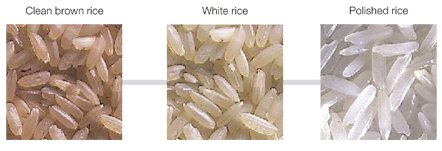
White rice is rice which has been milled, having it's husk, bran and germ removed. This is done to extend the life of the grain, so that it can be shipped further and stored for longer.

The Milling process
The main difference between brown rice and white rice is the milling process, which affects the nutritional content. Milling is often referred to as "whitening" because the variety of rice may be identical, but milling removes the husk and the bran from the grain turning it from brown to white. After milling, white rice is polished, to give it a bright, white, shiny appearance.

Take a Grain of rice --> remove the outer layer (the husk) = Brown rice (bran layer) --> remove bran layer = White rice.
So what's lost in the milling process?
The process of removing the husk and the bran from the rice takes away some of the nutritional benefits of rice. For more information on the nutritional information please see the table below.
  • During the milling and polishing process many vitamins and dietary minerals are lost. In "enriched" white rice some of these nutrients are added back in a chemical form, such as vitamins B1, B3, and iron, but the majority are lost.
  • In removing the bran layer the oil is also removed, a recent study has shown that rice bran oil may help lower LDL cholesterol.
  • Fiber and fatty acids are also lost in the process, one cup of brown rice has over three grams of fiber, while the equivalent white rice has less than one gram.
  • Brown rice is reputedly easier to digest, because it contains more bran than it's white rice counterpart.
There is also a chemical difference between the two for more information please compare: White rice and Brown rice.

Table of Nutritional differences between Brown and White rice:

Brown Rice (one cup) White Rice (one cup)
Calories 232 223
Protein 4.88 g 4.10 g
Carbohydrate 49.7 g 49.6 g
Fat 1.17 g 0.205 g
Dietary Fiber 3.32 g 0.74 g
Thiamin (B1) 0.176 g 0.223 g
Riboflavin (B2) 0.039 mg 0.021 mg
Niacin (B3) 2.730 mg 2.050 mg
Vitamin B6 0.294 mg 0.103 mg
Folacin 10 mcg 4.1 mcg
Vitamin E 1.4 mg 0.462 mg
Magnesium 72.2 mg 22.6 mg
Phosphorus 142 mg 57.4 mg
Potassium 137 mg 57.4 mg
Selenium 26 mg 19 mg
Zinc 1.05 mg 0.841 mg

Cooking Brown Rice
Brown rice takes longer than white rice to cook, so you need to increase the amount of water slightly.
  • To prepare brown rice, use 2 cups of water for each cup of brown rice, and salt to taste.
  • Bring salted water to a boil, and stir in rice.
  • Reduce heat to a minimal simmer, and cook tightly covered for 30-45 minutes or until all water has been absorbed into rice.
Note: Use slightly more water for sticky rice. Use slightly less water for fluffy.
Adding a couple tablespoons of yogurt helps to give brown rice the texture of white rice.


Reference:

http://en.wikipedia.org/wiki/Brown_rice
http://en.wikipedia.org/wiki/White_rice
http://www.drlam.com/opinion/brown_rice_vs_white_rice.cfm
http://nutrition.about.com/od/healthyshopping/f/brown_white_ric.htm

Sunday, September 23, 2007

Fresh Glass of Water?

The other day I recieved a graphic example of how well my water filter works. I've had many people ask me why I filter my water, and there are many good reasons to do it. If I could afford to I would filter all of the water that comes into my home!

I have a Brita water jug, and all of our drinking water, including water for our plants, and the kettle goes through the jug. At the Brita (Australia) website there is a really good explanation as to why you would want to filter your water? if you would like more information.

A few days ago the council was working on our water pipes, and they turned off the water for about seven hours, when it came back on, it was not pretty. Pictured right, is how it looked after the tap had been running for about 10 minutes. I didn't want to wash my hands under that, let alone drink it. It has since slightly improved, although still a little orange, (I'm shuddering right now!)

I thought this was a perfect time to test the water filter, I should note: the filter needed changing, so it was on it's last legs at this stage.
Pictured Right the water before and Pictured Left the water afterwards. I was so impressed, this really made me see why my partner said that it was so important to have a water filter.
I get to have a fresh glass of water without all those chemicals and crap woohoo!!!

You can clearly see in this picture below the water at the top, out of the tap, and the water below, after being through the filter. I honestly don't know what I would do without my filter, it is amazing!

Slice Anyone?

We have a new kitchen appliance in our home, and it's wonderful. It has taken me a little while to get used to the way that it works, however now I can have fresh bread, pizza dough, cake mix or anything else I can imagine to mix, or cook in a Bread Maker.

Making your own bread, without a bread maker, can be a bit of a trial, it takes a long time, and the things that can go wrong are numerous, but it does save you a lot of money.

Now that we have a bread machine I don't have to worry, we can make a loaf of bread for between $0.75 and $1.25, (Considering the average loaf of bread is around $3 AUD I'm not whining) and it's really easy to use. It took me a bit of experimentation to discover what was the right mix of ingredients for my machine (each one varies), but now that I've worked it out it's really simple.

I certainly think that it is worth the money, and I wouldn't take it back. Not only is it easy and fun to make but the smell of fresh bread is amazing. The other big bonus is that I know Exactly what's in my bread, no preservatives or nasties just what I put in. I love it, and the birds seem to appreciate the leftovers too ;)

Below is my first ever loaf of bread from our bread maker...

Saturday, September 8, 2007

Feeding the ants

I've had trouble with ants in my home many times, and now I've found a quick and easy solution.

First I went out and scouted their home. This doesn't take much effort just follow where the majority are coming from and are going too.

Then when I take the scraps out to feed the birds I leave a touch behind for the ants. They don't need a lot, anything sweet, sticky or rotten is perfect. I find little scraps of bread are highly sort after. Crumble them up really small and place it around the ants home.

They wont bother coming inside if there is a better feed closer to home. This has worked perfectly for us, perhaps it will work for you too, Good luck ;)

Tuesday, September 4, 2007

A litre of yogurt for $1

I wrote a post in July talking about my yogurt maker. At the end of the post I commented on wanting to learn to keep the yogurt cultures going, then I could make my own yogurt, without having to buy the $3+(AU) sachets.

After a bit of experimentation I've done it. I can make a litre of yogurt for about $1(AU), and it's really easy to do:

Ingredients:
Powdered Milk
Filtered Water
45ml of Yogurt

Instructions:

  1. Mix up 1 litre of powdered milk; following the instructions on powdered milk packet.
  2. Place milk and 45ml of yogurt in the yogurt maker jar and shake well.
  3. Place jar in yogurt maker, filled with boiling water for 6-12 hours.
*Notes:
  • You can use ordinary milk out of a carton, I suggest boiling it to take out any impurities, also it will cost more than $1 for your yogurt.
  • I find using a little less powder than the powdered milk packet suggests, makes the yogurt taste better.
  • The yogurt can be any type you choose, the idea is to cultivate the yogurt cultures you desire. I chose to use the yogurt that I created using a sachet from: Easiyo

Friday, July 27, 2007

Fresh Natural Home Made Yoghurt

Yesterday my partner brought me an Easiyo yoghurt maker. We just took the first batch out.
It's really yummy :D.

We brought the Natural Plain Unsweetened. I thought it would taste a little bitter, but it was so beautiful.

It was incredibly easy to make with the yoghurt maker.

  • Half-fill the yoghurt jar with cold water (personally I use filtered water).
  • Pour in the sachet.
  • Put the lid on and shake the jar really well.
  • Then fill the jar to the top with water, and re-shake.
  • Pour boiling water into the yoghurt Maker to the top of the baffle.
  • Place jar inside the yoghurt Maker.
  • Leave sitting for between 8 and 24 hours (until set).
  • Then store the yoghurt jar in the refrigerator.
To add to the taste a little, Daz made a bowl of pineapple yoghurt. To do this all he did was chop up a bit of pineapple (to taste) then added about a teaspoon of raw sugar. It was perfect.


Edit: After leaving the yoghurt in the fridge all night I had some more. It had set really nicely, and was even more tasty than before.

I want to learn now how to keep the cultures going so that I don't have to keep buying the sachet's.
I want to know exactly what I'm putting in my families food.

Saturday, June 30, 2007

Your Are What You Eat

This morning Daz sent me an interesting link: What the World Eats. It has made me really think. Not only about privilege and wealth, but about health, and the effect of our eating habits.

It's disgusting that "the second leading cause of preventable deaths" in the United States is obesity. Yet on the other side of the world people are starving. Problems which could be solved if it wasn't for greed.

I have been wondering what other heath problems could be solved with a balanced and healthy diet? How many people would feel better simply by changing what they eat?

When you go to the Doctors unless you have a broken bone, a cut, or something similar, doctors give you drugs. They don't offer any other options (otherwise they wouldn't get kick backs from the drug companies; How Drug Companies Spin Doctors, Physicians and bribery, Drug Company Corruption Quotations).

I hope this article helps you think as well.
Which extreme do you fit into? The brightly coloured preprocessed packets of the American family, the burlap bag of the family from Chad, or somewhere in between?